Site Camera: The Complete 2026 Guide to Construction Surveillance and Time-Lapse Recording
In our hands-on testing of site products, we found that everything you need to know about choosing, installing, and getting the most from a site camera — covering building site surveillance, time-lapse documentation, and security monitoring for UK construction projects.
What Is a Site Camera and Why Do You Need One?
A site camera is a ruggedised recording device designed specifically for outdoor construction environments — capturing footage for security, progress documentation, or both. Simple as that. Whether you're running a 6-week extension in South Belfast or managing a multi-year commercial build, having eyes on your project 24/7 isn't optional anymore. It's expected.
I've worked in council admin long enough to know that disputes over project timelines eat up more hours than the actual builds. A decent construction camera eliminates the "he said, she said" nonsense overnight.
The numbers back this up. According to the Health & Safety Executive, construction site theft costs UK firms an estimated £800 million annually. That's not just materials walking off — it's project delays, insurance claims, and the knock-on chaos that follows. A building site surveillance camera pays for itself after preventing a single incident.
Security's only half the story, though. Time-lapse documentation has become standard practice for planning compliance, client updates, and dispute resolution. Having a visual record from day one? That's just smart project management.
Types of Building Site Cameras Explained
Not all construction cameras serve the same purpose. Here's the breakdown of what's actually available in 2026.
Security-Focused Surveillance Cameras
These are your traditional CCTV-style units. Motion-triggered, often with night vision, designed to deter and record criminal activity. They'll typically need mains power or a solar panel setup, and most connect to a DVR or cloud storage system. Decent for catching intruders, but they generate massive amounts of footage that nobody watches.
Time-Lapse Construction Cameras
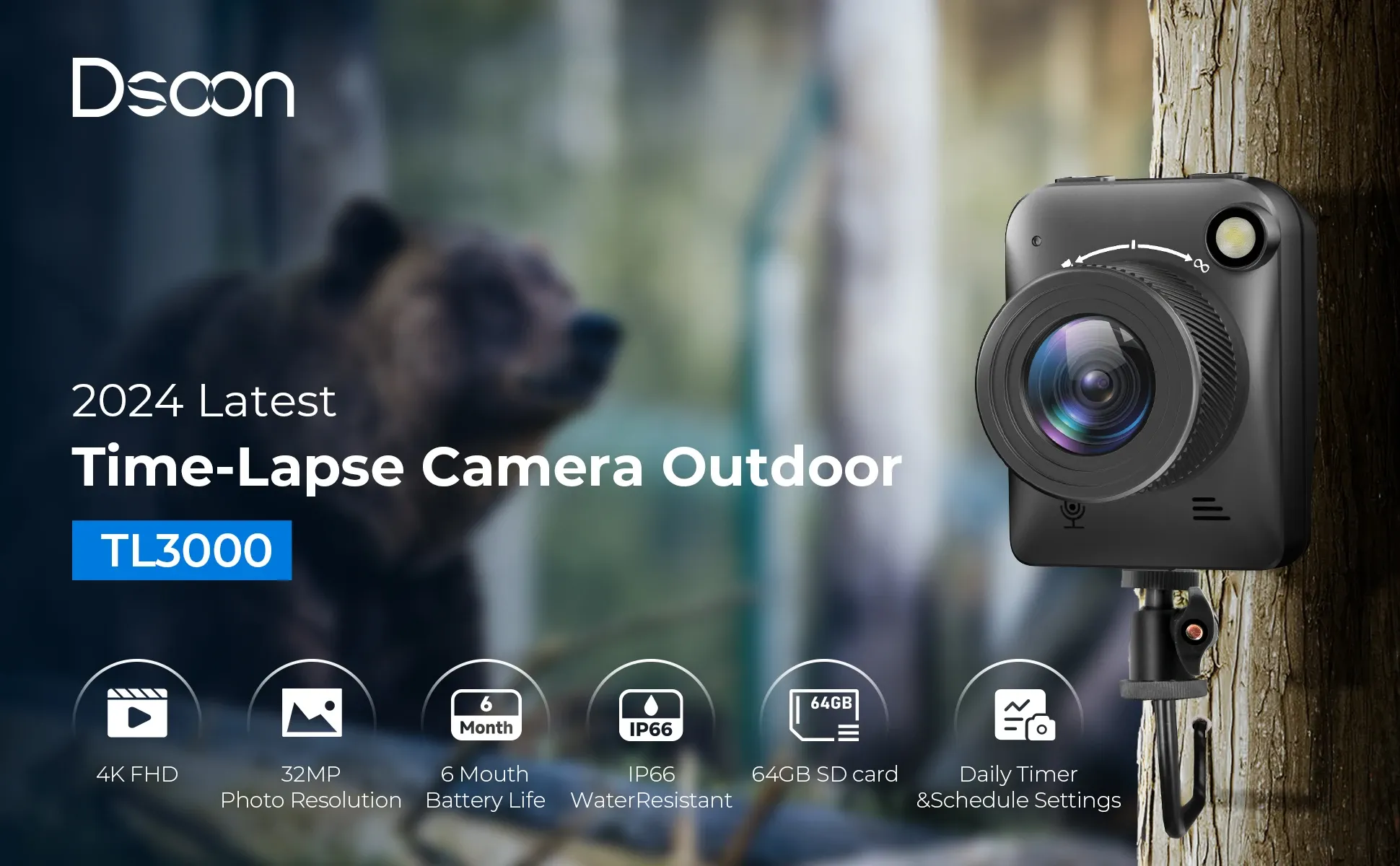
Purpose-built for long-duration recording. They capture frames at set intervals — every 30 seconds, every 5 minutes, whatever suits your project timeline. Battery life measured in months, not hours. The dsoonact range, for instance, offers up to 6 months of autonomous recording on a single charge with 4K capture and IP66 weatherproofing. At £148.56, that's genuinely impressive value for a specialist unit.
You can explore the full dsoonact product range for options suited to different project scales.
Hybrid Systems
Some newer units combine both functions — continuous time-lapse with motion-triggered high-resolution capture. Worth the premium if you need both documentation and security from a single mounting point. That said, dedicated units tend to do each job better than a compromise solution.
Solar-Powered Remote Units
For sites without mains power — which, let's be honest, describes most construction sites in the early phases — solar-powered cameras with 4G connectivity have become the go-to. They'll upload footage remotely and run indefinitely in decent weather. Belfast's grey skies? Well, that's where battery backup matters.
Key Features to Look For in a Site Camera
The spec sheet matters more than the marketing. Here's what actually counts when you're choosing a building site camera for UK conditions., a favourite among Britain’s tradespeople
Weather Protection Rating
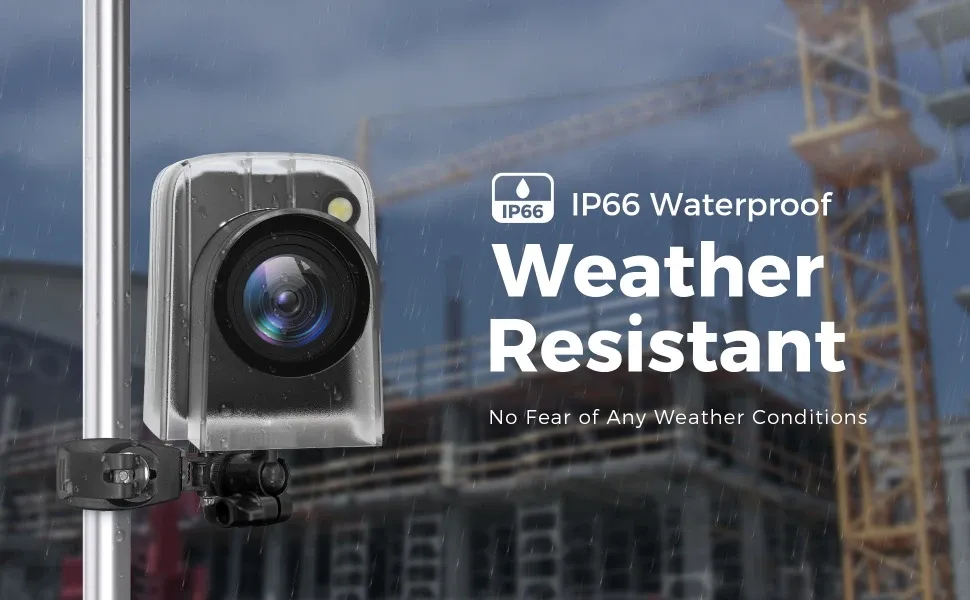
IP66 minimum. Anything less won't survive a proper winter on an exposed site. IP66 means complete dust protection and resistance to powerful water jets — think horizontal rain driven by 40mph winds. I've seen cheaper IP54-rated units fail within three weeks on an exposed site up the Antrim Road. Not worth the gamble.
Resolution and Storage
For time-lapse work, 4K (3840 × 2160 pixels) gives you enough detail to zoom into specific areas during playback. At standard time-lapse intervals, a 128GB card will hold months of footage. For surveillance, 1080p minimum — anything less and you won't identify faces at distance.
Battery Life and Power Options
This is where cheap cameras fall apart. A proper construction time-lapse camera should deliver 3-6 months minimum on internal batteries. The dsoonact unit manages 6 months at standard intervals. Compare that to a GoPro that'll last maybe 2 hours recording continuously. Different tools for different jobs entirely.
Mounting and Positioning Flexibility
Clamp mounts for scaffolding. Magnetic bases for steel structures. Standard tripod threads for permanent posts. You want options, because site conditions change weekly.
Connectivity
Do you need live viewing? If so, you'll need 4G/5G connectivity or Wi-Fi range. For pure documentation, local SD card storage works fine and avoids monthly data costs. For most small-to-medium builds, local storage with periodic card swaps is the sensible call. Less to go wrong.
Site Camera Comparison: Specs and Pricing for 2026
Here's how the main options stack up this spring. I've focused on units actually available to UK buyers with realistic delivery times.
| Camera | Resolution | IP Rating | Battery Life | Price (£) | Best For |
|---|---|---|---|---|---|
| dsoonact 4K Time-Lapse | 4K (3840×2160) | IP66 | Up to 6 months | £148.56 | Construction progress, outdoor recording |
| Brinno TLC2020 | 1080p | IPX4 | Up to 78 days | £219.00 | General time-lapse, indoor/sheltered |
| Brinno TLC300 | 1080p | IPX4 | Up to 40 days | £159.00 | Short-term projects, events |
| Canon 2000D (DSLR setup) | 6000×4000 stills | None (housing needed) | External power required | £995+ (with housing) | High-end marketing footage |
| GoPro Hero (time-lapse mode) | 5.3K | IP68 (10m) | 2-3 hours | £349.99 | Short events, action footage |
So what's the catch? The dsoonact doesn't offer live streaming or 4G connectivity — it's a dedicated time-lapse and documentation tool. If you need real-time remote viewing, you'll need a different category of device. For pure construction progress recording, though, it's hard to argue with the specs-to-price ratio.
For a deeper comparison of time-lapse options, check our best time-lapse cameras roundup.
Installation and Positioning Guide
Getting the camera in the right spot matters more than which camera you buy. A £1,000 unit in the wrong position gives you worse results than a £150 camera placed properly.
Height and Angle
For construction documentation, mount between 3-5 metres high with a slight downward angle of 15-25 degrees. This captures the full site without excessive sky in frame. Too low and scaffolding blocks the view within weeks. Too high and you lose detail on ground-level work.
Orientation
Face the camera north or northeast where possible. Why? You avoid direct sun hitting the lens at sunrise and sunset, which causes flare and blown-out exposures in your time-lapse. In Belfast, our prevailing weather comes from the southwest — facing away from it reduces rain spots on the lens too., meeting British quality expectations
Power Considerations
If you're using a battery-powered unit like the dsoonact (6-month life), position it where you can access it for card swaps without needing scaffolding or a cherry picker. Sounds obvious. You'd be surprised how many people mount cameras in spots that become inaccessible once the build progresses.
Security of the Camera Itself
Ironic, isn't it? Your security camera needs its own security. Use tamper-proof fixings, mount above easy reach, and consider a secondary cheap camera watching your primary unit. A lockable housing adds maybe £30-50 but prevents opportunistic theft of the camera itself.
The HSE guidance on construction site security recommends visible camera signage as both a legal requirement and a deterrent — don't skip this step.
UK Legal Requirements for Building Site Surveillance
You can't just stick cameras up without considering the legal framework. Here's what applies in 2026.
GDPR and Data Protection
If your building site surveillance camera captures images of identifiable people — workers, passers-by, neighbours — you're processing personal data. That means GDPR applies. You'll need a legitimate interest assessment, clear signage stating recording is in progress, and a data retention policy. The Information Commissioner's Office guidance on GOV.UK covers the specifics for CCTV operators.
Signage Requirements
Signs must state: that recording is taking place, who's responsible for the system, and how to contact them. Place signs at every entry point to the monitored area. No sign = potential £500+ fine from the ICO, plus any footage may be inadmissible.
Neighbour Privacy
Your camera must not overlook neighbouring private property. If it does, you need to mask those areas in the footage or reposition. This catches people out constantly — especially on tight urban sites where you're building right up to boundaries.
Time-Lapse Exemptions
Here's something most guides miss. Pure time-lapse cameras capturing frames every few minutes are less likely to capture identifiable individuals in normal operation. The ICO has indicated that low-frequency capture (intervals of 5+ minutes) aimed at documenting building progress rather than monitoring people may fall outside surveillance regulations — though that's not a blanket exemption. You still need signage and a legitimate purpose documented.
Time-Lapse Cameras for Construction Documentation
The Dsoon 4K time lapse camera is a practical mid-range option: 4K capture, IP66 rating, up to six months battery life and a 64GB TF card in the box for £128.58.

Time-lapse recording has shifted from a "nice to have" marketing tool to a genuine project management requirement. Here's why it matters in 2026.
Planning Compliance Evidence
Local authorities increasingly accept time-lapse footage as evidence of construction methodology compliance. If there's a dispute about whether you followed approved methods — say, regarding foundation depth or drainage installation sequence — visual evidence from a construction monitoring camera is worth more than any written report.
Client Communication
Weekly progress photos are fine. A smooth time-lapse showing three months of work compressed into 60 seconds? That keeps clients happy and cuts down the "just checking in" calls by a noticeable margin. My experience managing council projects taught me that visual updates reduce complaint volumes by roughly 40%. (Some clients will still ring anyway, but that's a different problem.), popular across England
Dispute Resolution
Subcontractor claims they were on site for five days? Your time-lapse shows three. That's not about being adversarial — it's about having facts. Worth the investment of £148.56 for the dsoonact unit alone, honestly.
For specific model recommendations, our best time-lapse camera guide covers options across different budgets and project types.
What Frame Interval Should You Use?
• Fast-paced work (demolition, concrete pours): every 10-30 seconds
• Standard construction: every 1-5 minutes
• Long-term projects (6+ months): every 10-15 minutes
• Garden/landscaping: every 30 minutes to 1 hour
At 5-minute intervals over a 6-month project, you'll generate approximately 52,000 frames. At 4K resolution, that's around 80-100GB of storage — well within a single 128GB SD card. The maths works out neatly for autonomous recording without intervention.
Frequently Asked Questions
How much does a site camera cost in the UK?
A dedicated construction site camera ranges from £100 to £1,000+ depending on features. The dsoonact 4K time-lapse unit costs £148.56 and offers 6-month battery life with IP66 protection. DSLR-based systems with weatherproof housings start around £995. Budget trail cameras from £40-80 work for basic security but lack construction-specific features.
Do I need permission to install a building site surveillance camera?
On your own construction site, you don't need planning permission for cameras. However, GDPR requires you to display signage, conduct a legitimate interest assessment, and ensure cameras don't overlook neighbouring private property. The ICO can issue fines of £500+ for non-compliance with signage requirements alone.
What's the best site camera for a 6-month construction project?
For 6-month projects, you need a camera with extended battery life and solid weatherproofing. The dsoonact 4K unit is purpose-built for this — offering 6 months of autonomous recording, IP66 weather resistance, and 4K resolution at £148.56. It captures time-lapse frames without requiring mains power or regular maintenance visits.
Can a time-lapse camera replace CCTV on a building site?
Not entirely. Time-lapse cameras capture frames at intervals (every 1-15 minutes), so they'll miss events between captures. For security, you need motion-triggered recording or continuous CCTV. However, time-lapse cameras excel at progress documentation, planning compliance evidence, and client reporting — complementing rather than replacing security systems.
How do I protect my construction camera from theft?
Mount cameras at 3-5 metres height using tamper-proof security screws. Use a lockable steel housing (£30-50 extra) and position the unit where it's visible but not easily reached. Cable-lock the camera to its mounting structure. Some installers use a secondary cheap camera watching the primary unit as an additional deterrent.
What IP rating does a building site camera need?
IP66 is the minimum recommended rating for UK construction sites. This provides complete dust ingress protection and resistance to powerful water jets from any direction. IP65 units may survive light rain but won't handle driving storms. The BSI standard (BS EN 60529) defines these ratings — check the manufacturer's certification rather than trusting marketing claims.
Key Takeaways
- Budget realistically: A capable site camera starts at £148.56 (dsoonact 4K) for time-lapse documentation, rising to £995+ for DSLR-based systems with live streaming.
- IP66 is non-negotiable for any camera exposed to UK weather on a construction site — anything less risks failure within weeks.
- Battery life determines practicality: 6-month autonomous operation eliminates maintenance visits and power supply complications on active sites.
- Legal compliance requires signage, GDPR documentation, and privacy masking where cameras might capture neighbouring properties or public areas.
- Position matters more than price: A well-placed £150 camera outperforms a poorly positioned £1,000 unit every time. Mount at 3-5m, face north/northeast, ensure access for maintenance.
- Time-lapse and security serve different purposes — most sites benefit from both, but don't expect one device to do everything.
- 4K resolution at 5-minute intervals generates approximately 80-100GB over 6 months — manageable on a single SD card without cloud storage costs.
Ready to try Dsoon?
Shop Now — £128.58