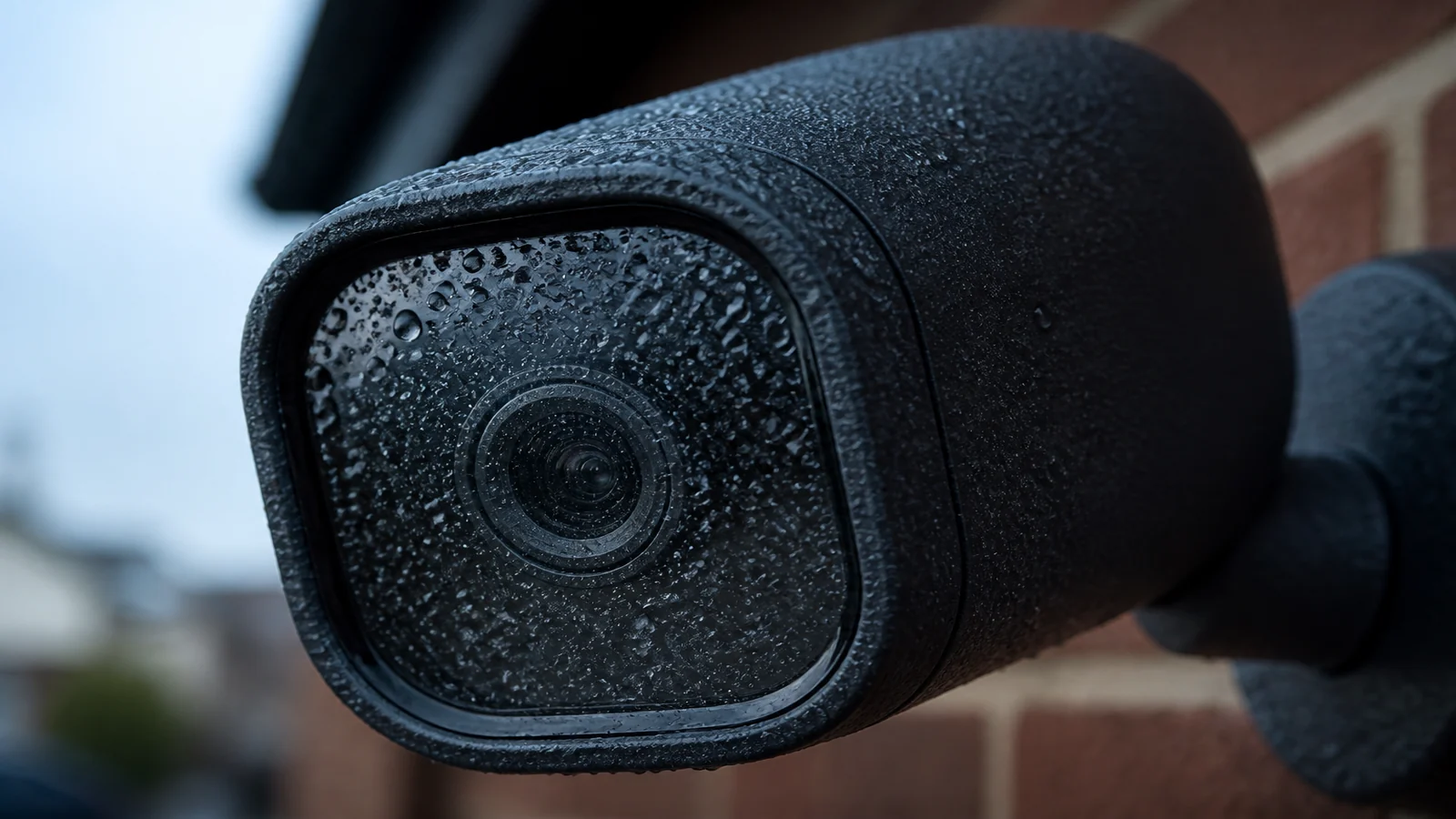
Time Lapse Camera Condensation Prevention UK: Diagnose the Cause Before You Open the Housing
Decide whether moisture is on the outside of the viewing area, inside it, or introduced by handling, then change the environment before you touch the camera. UK outdoor time-lapse setups often look misted after a cool, damp night. Wiping, warming, or opening the housing is usually the wrong first move. This page is a diagnostic sequence. It does not claim that any product is waterproof, and it does not tell you to open a wet enclosure.
Is the moisture on the outside or inside of the viewing area
Look, do not open. Stand at the position already approved for viewing the camera. Compare what you see on the outer surface with what you see in the captured frame.
External moisture is dew, rain film, or spray on the outside of the glass or housing. It often looks like beads or a sheet that you could imagine wiping. In the file, the scene behind may still be sharp except for flare, sparkles, or local blur. After the air warms or the sun reaches the glass, that pattern often changes without anyone touching the unit.
Internal moisture is fog, droplets, or a veil that sits on the inside of the front glass or on the lens group. In the file, the whole image looks milky, and the pattern does not dry when the outer surface looks dry. You cannot wipe it from the approved standing position. A bright torch from outside may show droplets that do not belong to the outer skin.
Handling moisture is different again. It appears after someone breathed on the glass, fitted a cold camera into a warmer room, or closed a housing with wet gloves. It can look internal even when the weather later turns fine, because the water was carried in.
If you cannot tell, treat it as internal until a later dry inspection proves otherwise. Guessing that it is “just dew” is how people polish a housing that needed to be taken out of service.
Why does condensation appear after temperature changes
Condensation is water leaving the air onto a surface that is colder than the surrounding air’s dew point. UK nights, clear dawns, and showers followed by sun create exactly that swing. A metal or plastic housing that sat out overnight can be colder than the morning air. Moisture then forms on the outside. That is ordinary weather, not a verdict on the product.
Internal fogging needs a path for moist air or a reservoir of water already inside. Typical project causes, without blaming a particular seal design, include:
- a housing closed on a wet site, trapping damp air;
- a unit moved from a cold van into a warmer indoor store, then back out;
- repeated temperature cycling through a British week of rain and brief sun;
- a cover that was not fully seated after a previous visit, which is a handling issue, not a licence to redesign the enclosure.
You do not need a laboratory number to use this. You need to know whether the water is behaving like weather on the skin, like a trapped atmosphere, or like a leak after a knock. Those three stories lead to three different next actions.
Do not diagnose from a single dramatic frame. Compare a sequence: last clear evening, first misted morning, later the same day. External dew often comes and goes. Internal fog that is still there after a dry afternoon is a different problem.
What can I change without opening or modifying the camera
Change the environment and the routine before you add accessories, and do not add accessories this page cannot verify.
- Move the unit out of a known cold trap if the mount already allows a small shift without a new access risk: away from a metal sheet that radiates heat at night, out of a drip line from an eaves or scaffold board, or out of a splash zone beside a wheel-wash.
- Give the housing overnight shelter that the site has already approved: a simple rain drip above, not a sealed box that cooks the unit in the day and then sweats.
- Stop bringing the camera indoors every evening if that is creating a warm-wet-cold cycle. A stable outdoor position can be kinder than a daily temperature shock.
- Leave the unit closed. Do not insert unverified desiccant packs, do not drill vents, and do not park a heater, hairdryer, or vehicle exhaust on it.
- Do not run to the camera across a live site to wipe dew. A smear from a dirty glove is a new defect. Wait for a planned, authorised moment, or wait for the weather to pass if the files remain usable.
If the only proposed fix is a gadget, a drilled hole, or a heat source, you have left diagnosis and entered modification. Modification is outside this article. Follow the manufacturer instructions or take the unit out of service.
How should I dry and test the setup safely
Use a recovery sequence that never starts with an open, wet interior.
- Pause the urge to wipe. Save the misted frames. They are evidence of timing, not rubbish to delete.
- Confirm which side the water is on using the outside-versus-inside checks above, from a position you are already allowed to occupy.
- If the moisture is external and the mount is safe to leave, wait through a dry spell and compare later frames. Many UK dew events clear without a visit.
- If a planned visit is already happening, dry the outside only, with a clean, lint-free cloth the manufacturer allows, without rotating the composition, and without opening covers.
- If you must recover the unit, take it still closed to a dry indoor space at ordinary room temperature. Let it equalise for hours, not minutes. Do not put it on a radiator, in an oven, or in a car windscreen in full sun.
- Only when the exterior is dry and the housing has sat closed in a dry room should anyone consider following the manufacturer’s inspection steps. If those steps require opening, that is a workshop task for a dry unit, not a wet-site task.
- Test with a short capture sequence in the dry room or back on the approved mount. Pass means clear frames that stay clear after another cool night, not one heroic indoor still.
If water is visible inside and does not recede after a long, closed, room-temperature rest, the enclosure is no longer a field-service item. Stop.
When is the enclosure no longer suitable for continued use
Take the camera out of the programme when any of these are true:
- droplets or a film remain on the inside of the glass after a dry, closed, room-temperature rest;
- there is standing water in a seam, a battery door, or a cable gland, even if the image still looks “usable”;
- the housing was opened while wet, or was powered while wet inside;
- the unit was knocked, the cover will not seat, or a previous “temporary” gap was left in the seal;
- drying would require heat, drilling, or any modification this article has already ruled out;
- reaching the camera to inspect it would create an access problem that the site has not already approved.
Continued use “until the end of the month” is how a damp interior becomes corrosion, mould on the glass, or an electrical fault. A gap in the film is recoverable. A wet interior that was kept live is a worse failure.
Diagnostic ladder
- Is the water on the outside of the viewing area? If yes, and frames recover as the surface dries, treat it as weather and leave the housing closed.
- Does the fog remain after the outside is dry? Treat it as internal or handling moisture. Do not open on site.
- Did someone recently move the camera between cold and warm, or close it with wet hands? Change that routine before buying anything.
- Can a small, already-approved change of position or drip shelter reduce the cold-trap or splash? Do that next.
- Can a closed, room-temperature rest clear the interior without heat or tools? Test, then return only if the next cool night stays clear.
- If internal moisture persists, or the housing was wet-opened, or a seal no longer seats: the enclosure is no longer suitable for continued use.
Who this article is not for
This article is not for readers looking for a waterproof rating, an IP number, or a guarantee that a particular camera can stay out through a British winter. It is not a workshop manual for opening electronics. It is not written for people who want to dry a camera with heat, a microwave, rice, or a drilled vent. It is not a reason to improvise access across a live site to wipe dew.
Stop conditions
Stop if you would need to open a wet housing, apply a heat source, drill the enclosure, or place an unverified desiccant pack. Stop if internal droplets remain after a closed dry rest. Stop if the unit was powered while wet inside. Stop if reaching the camera requires an unplanned climb or an unauthorised visit. Take the enclosure out of service rather than modifying it in the field.
If you still need a compact outdoor unit
If the diagnosis points to ordinary external dew, the mount is already sheltered enough to leave closed, and you still need a compact camera for that position, you can review the construction time-lapse camera product page. Use the live listing and the manufacturer’s moisture and cleaning instructions. This article does not rate weather resistance and does not tell you to open the product.