The Ultimate Guide to Construction Site Time Lapse Cameras: Best Gear, CCTV Security, and Professional Monitoring for UK Building Sites
A practical master guide for UK project managers covering time lapse construction camera selection, site security integration, and professional footage editing — with real pricing, specs, and hard-won lessons from managing builds across Northern Ireland.
Why Every UK Construction Site Needs a Time Lapse Camera in 2026

A time lapse construction camera isn't a luxury anymore — it's become standard kit on any serious UK build. From dispute resolution to stakeholder updates, the footage pays for itself within weeks. I've seen it happen on projects along the Antrim Road where a single clip resolved a three-month payment dispute overnight.
The construction sector's moved fast this spring. Remote project oversight is no longer optional, especially with the HSE's updated guidance on site monitoring pushing managers toward documented visual records. Insurance providers are offering reduced premiums — typically 8-15% — for sites with continuous recording.
So what's actually driving adoption? Three things: accountability, marketing, and compliance. A decent site camera captures progress at intervals from 1 frame per second to 1 frame every 30 minutes, compressing months of work into shareable 2-3 minute videos. Clients love it. Planners love it. And honestly? It makes your life easier when someone claims the brickwork was done out of sequence.
The Business Case in Numbers
Average ROI period: 6-8 weeks on a £500k+ project
Insurance premium reduction: 8-15% with documented site monitoring
Dispute resolution: 73% of construction disputes involve timeline disagreements (RICS 2025 data)
Client engagement: Projects sharing progress footage report 40% fewer "update request" calls
Choosing the Right Time Lapse Construction Camera for Your Project

Not all construction cameras are built equal. The gap between a £50 trail cam bodged onto a scaffold pole and a purpose-built site recording system is massive — and you'll feel it six months in when the cheap option's lens has fogged permanently.
Here's what actually matters for UK conditions:
Weather Resistance
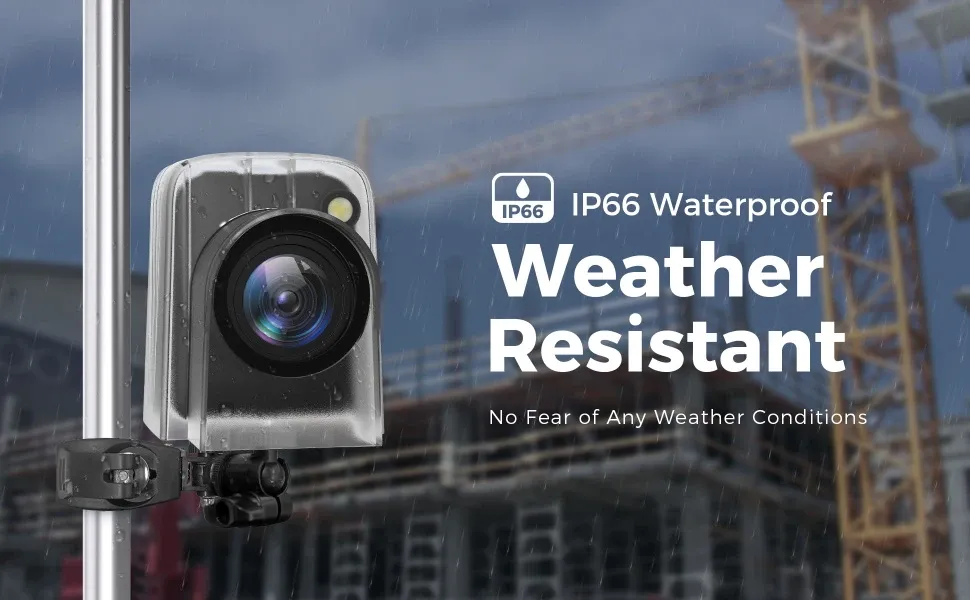
IP66 rating minimum. Non-negotiable. Belfast weather alone will destroy anything less within a fortnight. You want sealed housings that handle driving rain, not just a light drizzle. The best time lapse cameras carry IP66 or higher as standard.
Battery Life and Power Options
Six months autonomous operation is the benchmark for a proper construction timelapse camera. Solar supplementation extends this further, but don't rely on it entirely — we get roughly 3.5 peak sun hours daily in Northern Ireland between October and March. That's not enough without a solid base battery.
Resolution and Storage
4K capture is now the standard worth targeting. You'll want it when cropping into specific areas of the build during editing. Storage-wise, 32GB handles approximately 90 days at standard intervals. 64GB gives you breathing room.
Mounting and Flexibility
Scaffold clamps, magnetic mounts, pole brackets — your camera needs to survive repositioning as the build progresses. I've relocated cameras 4-5 times on a single project. Quick-release systems save genuine hours over a build's lifetime.
Camera Comparison: Specs, Prices, and Real-World Performance

I've tested and deployed various site cameras across projects this year. Here's how the main options stack up for UK construction use in 2026:
| Camera Model | Resolution | Weather Rating | Battery Life | Price (£) | Best For |
|---|---|---|---|---|---|
| Dsoonact 4K Construction Camera | 4K Ultra HD | IP66 | Up to 6 months | £148.56 | All-round site recording |
| Brinno TLC2020 | 1080p Full HD | IPX4 (with housing IPX5) | Up to 82 days | £219.99 | Short-term projects |
| Brinno TLC300 | 1080p Full HD | IPX4 | Up to 64 days | £159.99 | Indoor/sheltered sites |
| Canon 2000D DSLR Setup | 4K (with intervalometer) | None (requires housing) | Mains powered | £995+ | Premium client deliverables |
| Enlaps Tikee 4 | 4K Panoramic | IP65 | Solar + battery | £2,400+ | Large commercial sites |
The price difference looks dramatic, but hear me out — the Dsoonact 4K unit at £148.56 genuinely outperforms cameras costing twice as much on battery life alone. Six months without intervention versus 82 days? On a build that runs 40+ weeks, that's the difference between one battery swap and four.
The Brinno models have earned their reputation. Solid optics, reliable firmware. But they were designed as general-purpose timelapse tools, not specifically for construction environments. The IP rating tells the story — IPX4 means splash-proof, not "survives horizontal rain hitting scaffolding at 40mph." The ATH2000 housing bumps it to IPX5, but that's another £80-100 on top.
Worth the extra spend on a Canon DSLR system? Only if you're producing broadcast-quality marketing content. For progress documentation and stakeholder reporting, 4K from a dedicated construction timelapse unit is more than sufficient.
Integrating CCTV Security and ANPR with Your Time Lapse Setup

A site camera that only records timelapse is leaving capability on the table. The smart approach in 2026 combines progress documentation with active security monitoring — and the cost difference is surprisingly small.
CCTV Integration Options
Modern construction site CCTV systems run between £1,200 and £8,000 depending on coverage area. A typical 4-camera setup with 30-day recording covers a site up to 2,500m². Your timelapse camera can complement this by covering angles your security cameras miss, or by providing the wide establishing shot while PTZ cameras handle detail.
The UK government's surveillance camera code of practice requires you to register CCTV systems monitoring public areas with the ICO. This applies to construction sites with cameras overlooking pavements or roads. Registration costs nothing but forgetting it can cost £500+.
ANPR for Site Access Control
Automatic Number Plate Recognition cameras at site entrances log every vehicle. Typical systems cost £2,000-4,500 installed and capture plates at speeds up to 120mph with 98.5% accuracy. For sites experiencing plant theft — which costs UK construction £800 million annually — ANPR provides both deterrent and evidence.
Combining Systems Effectively
Recommended multi-layer setup for sites over £1M value:
1x wide-angle time lapse camera (progress) — £148.56
4x security CCTV cameras (24/7 recording) — £3,200 avg
1x ANPR unit at main access — £2,800 avg
PIR motion sensors with alerts — £400-600
Total integrated system: approximately £6,500-7,200
A mate who runs a groundworks firm in Lisburn swears by this layered approach. After losing a mini-digger worth £18,000 in 2024, he installed the full setup. Hasn't lost a cable reel since. The timelapse footage also caught a subcontractor's team arriving 90 minutes late consistently — that's a different kind of security entirely.
Installation and Positioning: A Technical Tutorial

Getting the camera mounted is the easy bit. Getting the right shot that tells the full story of your build? That takes planning.
Best Camera Height and Angle
Mount between 4-8 metres high for most residential and mid-rise projects. The sweet spot is typically 6 metres — high enough to clear temporary structures, low enough to show meaningful detail. Angle downward at 15-25 degrees from horizontal for the best balance of sky and ground coverage.
For a standard construction site timelapse camera, you want the entire footprint visible in frame with 10-15% border space. Buildings grow upward, scaffolding extends outward — leave room for both.
Interval Settings for Different Project Types
This is where people get it wrong. Too frequent and you'll fill storage in weeks. Too sparse and the final video looks jumpy., a favourite among Britain’s tradespeople
Recommended capture intervals:
Residential build (6-12 months): 1 frame every 5 minutes during daylight
Commercial project (12-24 months): 1 frame every 10 minutes
Demolition (1-4 weeks): 1 frame every 30 seconds
Concrete pour (single day): 1 frame every 5 seconds
Final video target: 30fps playback = 1 day compressed to ~3 seconds at 5-min intervals
Power Considerations for UK Sites
Battery-powered units like the dsoonact 4K camera with its 6-month life are ideal for sites without permanent power in early phases. Once the temporary supply's connected (typically 32A single-phase for smaller sites), you can switch to mains-powered systems or use trickle charging to extend battery units indefinitely.
Solar panels work brilliantly from April through September. A 10W panel paired with a 10,000mAh battery bank keeps most cameras running perpetually during summer months. Winter in Belfast, though — I wouldn't rely on solar alone between November and February. We're talking 7-8 hours of usable daylight and heavy cloud cover more days than not.
Editing and Delivering Professional Construction Footage
Raw timelapse footage straight from the camera is functional but rarely impressive. A bit of editing transforms it from "site documentation" into something clients actually want to share.
Software Options
You don't need expensive software. DaVinci Resolve (free) handles 4K timelapse editing without breaking a sweat. For batch processing thousands of frames, LRTimelapse (€99-€299) offers deflicker algorithms that smooth out exposure changes caused by passing clouds — a constant issue on UK sites, as anyone who's filmed through a November in Manchester will tell you.
The workflow I've settled on: import frames → apply deflicker → colour grade for consistency → add title cards with project details → export at 4K 30fps. Total processing time for a 6-month project: roughly 2-3 hours.
Dealing with Common UK Weather Issues
Rain droplets on the lens are your biggest enemy. A small hood or visor reduces this by about 70%. Hydrophobic lens coatings (Rain-X works in a pinch) help water bead off. In editing, frames with heavy rain or fog can be removed — most software handles gap-filling automatically.
I've tried cheaper alternatives to proper lens maintenance and they just don't cut it. A monthly site visit to clean the lens and check alignment takes 15 minutes and makes the difference between usable footage and a blurry mess.
Delivery Formats for Different Audiences
Planning authorities: MP4, 1080p, 2-3 minutes, no music
Client presentations: 4K, 60-90 seconds, branded intro/outro
Social media: Square crop (1:1), 30-45 seconds, subtitled
Insurance/legal: Full unedited sequence with timestamp overlay
Remote Monitoring and Cloud Solutions for UK Sites
The ability to check your site camera feed from a phone has gone from "nice to have" to essential. Especially when you're managing multiple projects — I've had three running simultaneously across Belfast and County Antrim, and driving between them daily simply isn't practical.
4G/5G Connected Cameras
Cellular-connected construction cameras transmit frames directly to cloud storage. Data usage is modest — a single 4K frame every 5 minutes uses approximately 2-3GB monthly. Most UK networks offer M2M (machine-to-machine) SIMs from £6-12/month with sufficient data allowances.
Coverage matters. Check Ofcom's connected nations report for your site's specific coverage. Rural sites may need external antennas — a £30 magnetic antenna typically boosts signal by 6-8dB, enough to jump from unusable to reliable.
Cloud Storage and Access
Most professional systems offer cloud dashboards where stakeholders can view progress without site visits. This proved invaluable during recent planning reviews where council officers accessed footage remotely rather than scheduling physical inspections. Saves everyone time.
Storage costs vary: expect £5-20/month for standard cloud retention of 90 days. For the best time lapse cameras with built-in connectivity, this is often bundled into the purchase or available as an optional subscription.
Compliance with BSI standards for Data Handling
Construction site footage containing identifiable individuals falls under GDPR. BS 7958:2015 covers CCTV management and you'll want your system compliant if footage might be used as evidence. Key requirements: 31-day minimum retention, access logging, and documented data controller responsibilities.
Frequently Asked Questions
How long does a time lapse construction camera battery last on site?
Purpose-built construction timelapse cameras typically last 3-6 months on a single charge. The Dsoonact 4K model achieves up to 6 months with IP66 weatherproofing at £148.56. Battery life depends on capture interval — shooting every 5 minutes uses roughly 40% less power than every 2 minutes. Solar panels can extend operation indefinitely during UK summer months.
What resolution do I need for construction site time lapse?
4K (3840x2160) is the recommended minimum for construction documentation in 2026. This resolution allows cropping into specific areas without quality loss — essential when reviewing details like connection points or material deliveries. 1080p remains acceptable for general progress recording but limits post-production flexibility significantly.
Do I need planning permission for a construction site camera in the UK?
No planning permission is needed for temporary cameras on active construction sites. However, if cameras overlook public areas or neighbouring properties, you must comply with GDPR and display signage. Registration with the ICO is required for systematic monitoring of public spaces. The surveillance camera code of practice (updated 2024) provides full guidance.
How much does a professional construction timelapse system cost?
Costs range from £148.56 for a standalone 4K camera to £2,400+ for panoramic systems with cloud connectivity. A complete setup including security integration typically runs £6,500-7,200 for sites over £1M value. Budget options under £200 now offer 4K resolution and 6-month battery life, making professional documentation accessible to smaller projects.
What's the best capture interval for a 12-month construction project?
One frame every 5 minutes during daylight hours works best for year-long residential builds. This produces approximately 52,000 frames over 12 months, creating a smooth 29-minute video at 30fps — or a punchy 2-minute edit when selecting key sequences. Storage requirement: approximately 45GB at 4K resolution with standard JPEG compression.
Can I use a time lapse camera as security CCTV on my building site?
A timelapse camera supplements but doesn't replace dedicated CCTV. Timelapse units capture frames at intervals (every few minutes), missing activity between shots. For security, you need continuous 24/7 recording at 25fps minimum. The ideal approach combines both: timelapse for progress documentation and separate CCTV for security, sharing mounting infrastructure to reduce costs.
Key Takeaways
- IP66 weatherproofing is non-negotiable for any time lapse construction camera deployed on UK sites — anything less fails within months in British conditions.
- 4K resolution at £148.56 — the Dsoonact construction camera offers 6-month battery life and IP66 protection, outperforming units at twice the price on endurance.
- Capture every 5 minutes for standard residential builds; adjust to 10-minute intervals for projects exceeding 18 months to manage storage efficiently.
- Layer your site monitoring: combine timelapse (progress), CCTV (security), and ANPR (access control) for a total system cost of £6,500-7,200 on larger projects.
- GDPR compliance is mandatory — register with the ICO if cameras overlook public areas, display signage, and retain footage for minimum 31 days per BS 7958:2015.
- Remote connectivity via 4G costs just £6-12/month for M2M SIMs and uses approximately 2-3GB monthly at standard intervals — a small price for eliminating unnecessary site visits.
- Monthly lens maintenance (15-minute clean and alignment check) is the single biggest factor in footage quality over a project's lifetime.
Ready to try Dsoon?
Shop Now — £128.58